Department of Medical Diagnostics Congratulates Prof. Alexander Debrah on His Appointment as Scientific Director of KCCR
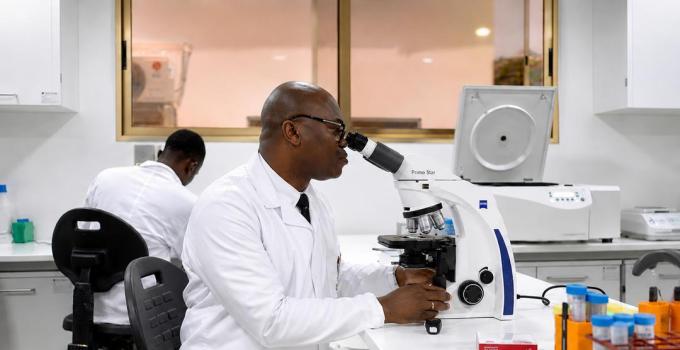
The Department of Medical Diagnostics, Kwame Nkrumah University of Science and Technology (KNUST) warmly congratulates Professor Alexander Yaw Debrah on his appointment as the Scientific Director of the Kumasi Centre for Collaborative Research in Tropical Medicine (KCCR).
Prof. Debrah officially assumed office on *1 August 2026*, succeeding Professor Richard Odame Phillips and taking on the leadership of one of Ghana's leading centres for collaborative research in tropical medicine and global health.
A world-renowned scientist, Professor of Parasitology and Global Health, Prof. Debrah has built an internationally recognised research career, particularly through his pioneering contributions to the understanding and treatment of filarial diseases and other neglected tropical diseases.
Pioneering research with global health impact
Among Prof. Debrah's most significant scientific contributions is his pioneering clinical research on the relationship between filarial worms and their endosymbiotic bacterium, Wolbachia. This work helped establish *Wolbachia as a therapeutic target and provided important evidence for the use of *doxycycline as a macrofilaricidal treatment* against adult filarial worms.
In a landmark clinical study conducted in Ghana, Prof. Debrah and colleagues demonstrated substantial macrofilaricidal activity following treatment with doxycycline. In a subsequent 2011 study involving men infected with Wuchereria bancrofti, patients treated with 200 mg of doxycycline daily for 4 weeks showed 100% adult-worm loss at 18 months, as determined by the filarial dance sign. The study also demonstrated that a shorter two-week regimen combining doxycycline with rifampicin produced a 50% adult-worm loss.
This body of work represented an important advance in the search for treatments capable of targeting *adult filarial worms*, which are responsible for much of the pathology associated with lymphatic filariasis, including lymphoedema, hydrocele and elephantiasis.
Prof. Debrah's research subsequently extended beyond demonstrating macrofilaricidal activity to investigating how doxycycline might contribute to the management of *filarial lymphoedema and its associated morbidity. His group's later clinical research compared **100 mg and 200 mg daily doxycycline regimens administered for six weeks*, alongside intensive hygiene measures, in patients with filarial lymphoedema. These studies have contributed valuable evidence to the continuing evaluation of doxycycline-based approaches to filarial disease management.
The significance of this work extends beyond academic publication. By targeting Wolbachia, Prof. Debrah's research contributed to an important therapeutic strategy directed at the adult parasite itself—an area where conventional antifilarial treatments have historically had important limitations. Current clinical guidance recognises evidence for adult-worm killing with doxycycline at 200 mg/day for 4–6 weeks.
A distinguished scientist taking on a major leadership responsibility
Prof. Debrah's appointment as Scientific Director of KCCR is therefore a recognition not only of his leadership abilities, but also of a distinguished scientific career characterised by research excellence, international collaboration, clinical investigation and translation of scientific discoveries into approaches with potential public-health impact.
The Department of Medical Diagnostics is particularly proud to see one of its distinguished professors assume this important responsibility. His appointment represents a source of immense pride for the Department and further strengthens the connection between KNUST, the Department of Medical Diagnostics and KCCR.
We are confident that Prof. Debrah's scientific vision, extensive international collaborations and experience in tropical medicine, neglected tropical diseases and clinical research will further advance KCCR's mission and strengthen its contribution to addressing major health challenges in Ghana, Africa and globally.
We look forward to the new opportunities his leadership will bring for research, postgraduate training, scientific innovation, interdisciplinary collaboration, capacity building and international partnerships.